

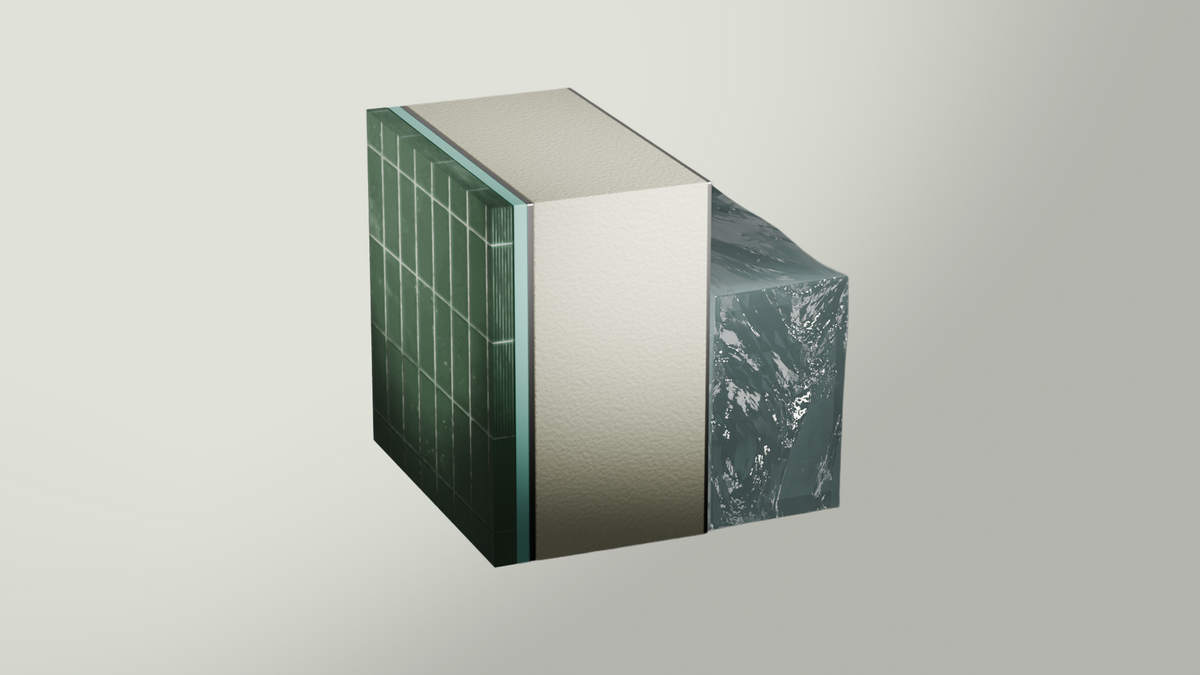
The materials an ice bath is made from determine far more than its appearance. They govern thermal performance, structural longevity, hygiene, and how well the bath holds up over years of demanding use. This article walks through which materials provide a reliable investment longterm.
Wood, fibreglass, acrylic or stainless steel - which ice bath material should you go for?
What makes a good material for the inner tub?
Stainless steel is a broad category, and the grade matters enormously, particularly in an environment combining cold water, sanitising chemicals, body oils, and varying mineral loads.
Grade 304 is the most widely used stainless steel in the world and the standard in most consumer-grade ice baths. It performs adequately in controlled conditions, but is vulnerable to chloride-induced pitting, a form of corrosion that appears as small dark spots or surface roughness. This is triggered by the chemical sanitisers, sweat, and mineral content present in any regularly used bath.
Grade 316 contains an additional element (molybdenum) that significantly improves resistance to chloride corrosion. It is the standard material in marine environments, food processing, medical equipment, and any application where sustained exposure to aggressive chemicals or salt is expected.
For an ice bath, 316 stainless is the correct choice. It resists the chemical and biological environment that sustained use creates, maintains its surface integrity over years, and requires less intervention to keep looking and performing well.
All Fjord baths are built from marine-grade 316 stainless steel throughout the inner vessel.
What about built-in pools?
Built-in concrete pools and baths have been used in cold therapy settings for decades, and they can have genuine aesthetic appeal in certain environments. But as a material for a precision-cooled bath, concrete has meaningful drawbacks.
Stainless steel conducts heat far more efficiently than concrete, which means the cooling system can transfer energy to and from the water more effectively. The bath reaches target temperatures faster and recovers more quickly after each session, which is an advantage in high-use environments.
Concrete also presents hygiene challenges. Its porous surface harbours bacteria and is difficult to clean thoroughly. Stainless steel is non-porous, inherently more hygienic, and significantly easier to maintain.
For this reason, Fjord has developed their Inbuilt range in 316 stainless steel as a superior alternative to concrete pools.
What makes a good ice bath exterior?
At Fjord we use powder-coated aluminium for all our freestanding baths. Powder coating is a great approach for an outdoor-rated or commercially deployed bath. The benefits are:
- A lightweight outer structure
- A finish that is resistant to chipping, scratching, and fading unlike normal paint.
- UV-stable, maintaining colour integrity through prolonged outdoor exposure.
- Chemically resistant to cleaning products and accidental spills.
- Available in an extensive range of architectural colours and finishes, allowing precise integration with the surrounding environment.
Insulation: The often-overlooked variable
Insulation is rarely discussed in ice bath marketing, but it has a significant impact on running costs, component lifespan, and performance consistency.
Many baths on the market use low-density foam insulation or minimal insulation altogether. This means the cooling system must work continuously against heat ingress from the surrounding environment, particularly in warm Australian conditions. The result is higher energy consumption, greater compressor wear, and less stable water temperatures.
Closed-cell foam insulation has a much lower thermal conductivity than open-cell alternatives, provides an effective vapour barrier, and maintains its insulating properties over time without compression or degradation. It is the appropriate standard for a high-performance bath.
All Fjord baths are insulated with thick (65mm for freestanding baths and XXmm for inbuilt baths) chemically-set, closed-cell polyurethane insulation vessel walls and base. In practice, this means the cooling system maintains target temperatures with significantly less energy input. In addition, it operates more quietly, because it rarely needs to work at full capacity.
The materials in a bath shape everything that follows — how it performs, how it ages, and how much attention it demands over time. Understanding what goes into a bath, and why those choices matter, makes it considerably easier to invest with confidence and find something built to last.
Share: